Helping an aging parent age in place: handyman modifications that help
By Shawn Dobanton · Updated 2026-08-10
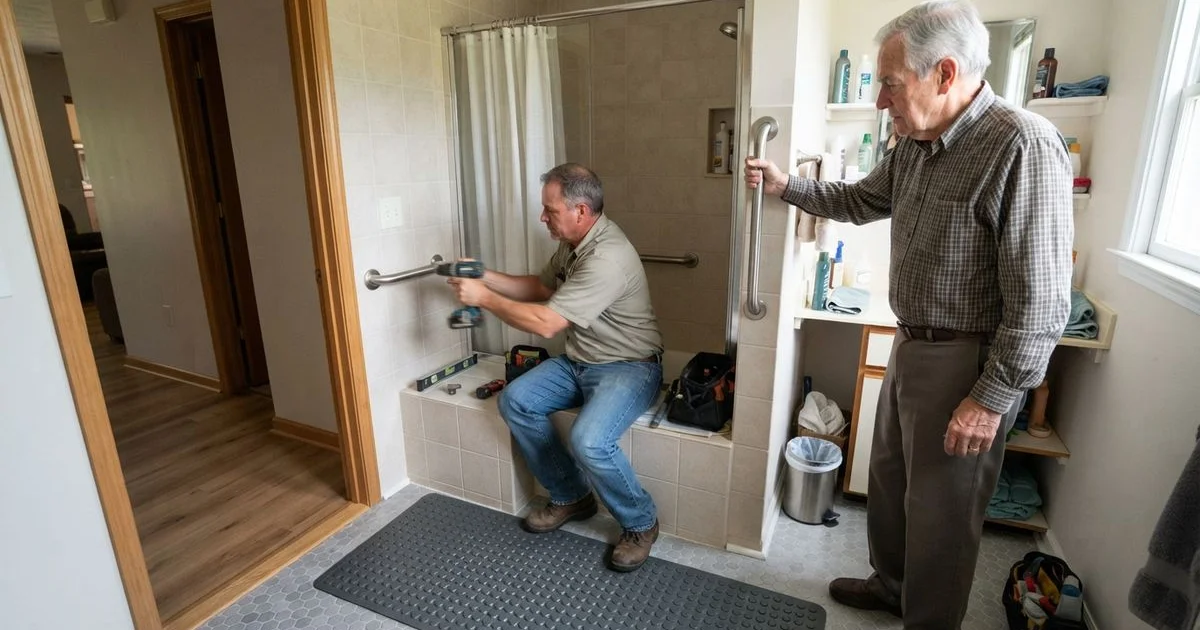
Helping a parent stay safely in their own home usually starts with a handful of specific, practical changes rather than a full renovation. Most of them are inexpensive, don’t take long to install, and make a real difference in day-to-day safety. Georgia’s general repairs hub is a good starting point for finding handymen who take on this kind of work.
Start with fall risk
Falls are the most common way an aging-in-place plan gets disrupted, and most of them happen in a few predictable spots.
- Bathrooms: grab bars near the toilet and inside the shower or tub, a non-slip mat, and a raised toilet seat if needed.
- Stairs and steps: secure handrails on both sides where possible, and better lighting at the top and bottom.
- Thresholds and doorways: low-profile transitions instead of raised thresholds that catch a foot or a walker wheel.
- Hallways and bedrooms: clear paths, secured rugs, and a nightlight or motion-sensor light for nighttime trips to the bathroom.
Common modifications and what they involve
| Modification | Typical scope | Handyman or specialist |
|---|---|---|
| Grab bars | Anchored into studs or blocking, one to two hours | Handyman |
| Stair handrail repair or addition | Securing to framing, an hour or two | Handyman |
| Wheelchair ramp | Varies widely with length and slope | Often a specialist for anything beyond a short, simple ramp |
| Widening a doorway | Structural, may need permitting | Specialist or licensed contractor |
| Walk-in shower conversion | Plumbing and tile work | Specialist, sometimes licensed |
Bringing it up without it feeling like a bigger conversation than it is
Many adult children put this off because it feels like admitting a parent can’t manage on their own, which makes an already sensitive topic harder to raise. A specific recent moment, a stumble on the porch step, trouble getting up from a low chair, tends to open the conversation more naturally than a general “we should talk about your safety” approach. Starting with one small, low-visibility change, like a bathroom grab bar, is often an easier first step than proposing a full list at once.
Lighting matters more than it gets credit for
Beyond the structural modifications, lighting is one of the most overlooked fall-prevention upgrades. Dim hallways, staircases without adequate light at both ends, and bedrooms without an easy-to-reach switch near the bed all raise fall risk in ways that don’t show up on a typical safety checklist. Motion-sensor lights in hallways and bathrooms, and higher-wattage bulbs in stairwells, are inexpensive fixes a handyman can usually complete in the same visit as grab bars and handrail work. It’s also worth revisiting those same fixtures before severe weather hits; our guide to storm season home prep in Georgia covers what else is worth checking beforehand.
What to check before hiring
Ask specifically whether the handyman has experience with accessibility modifications, not just general repairs. Grab bars anchored only into drywall, without finding studs or adding blocking, won’t hold real weight in an emergency, so this is a job where installation quality matters more than usual. If the project grows into a ramp or a bathroom conversion beyond a simple grab bar and rail job, ask to see examples of similar past work.
A simple way to prioritize if the budget is limited
If you can only tackle a few items right now, start with the bathroom grab bars and stair handrails first, since those address the two spots where falls happen most often. Lighting upgrades come next, since they’re inexpensive and quick. Bigger structural changes, like a ramp or a walk-in shower conversion, can follow once the higher-frequency, lower-cost risks are handled. This order isn’t the only right way to do it, but it puts the most protective, least expensive fixes first.
Getting help with cost
Some Area Agencies on Aging and veteran service organizations fund or subsidize safety modifications for qualifying households, so it’s worth checking eligibility before assuming the full bill lands on the family. Our directory covers providers statewide, scored using our ranking methodology.
FAQ
- What's the single most important modification for fall prevention?
- Grab bars in the bathroom, near the toilet and inside the shower or tub, since bathrooms are where most in-home falls happen. It's usually the highest-value, lowest-cost change you can make first.
- Do these modifications require a licensed contractor?
- Most, like grab bars, handrails, and lighting upgrades, are within general handyman scope. A ramp involving structural changes or an accessible bathroom remodel may call for more specialized experience; ask the provider directly about their track record with similar work.
- How do I bring up home modifications with a parent who's resistant?
- Framing it around a specific, recent near-miss (a stumble on the front step, difficulty getting out of the tub) tends to land better than a general conversation about aging. Starting with one small, unobtrusive change can also make the idea feel less like a big shift.
- Is there financial help available for these modifications?
- Some Area Agencies on Aging and veteran service organizations fund or subsidize home safety modifications for qualifying homeowners. It's worth checking eligibility before assuming the full cost falls on the family.