What handyman services cost in Georgia (and what changes the price)
By Shawn Dobanton · Updated 2026-07-20
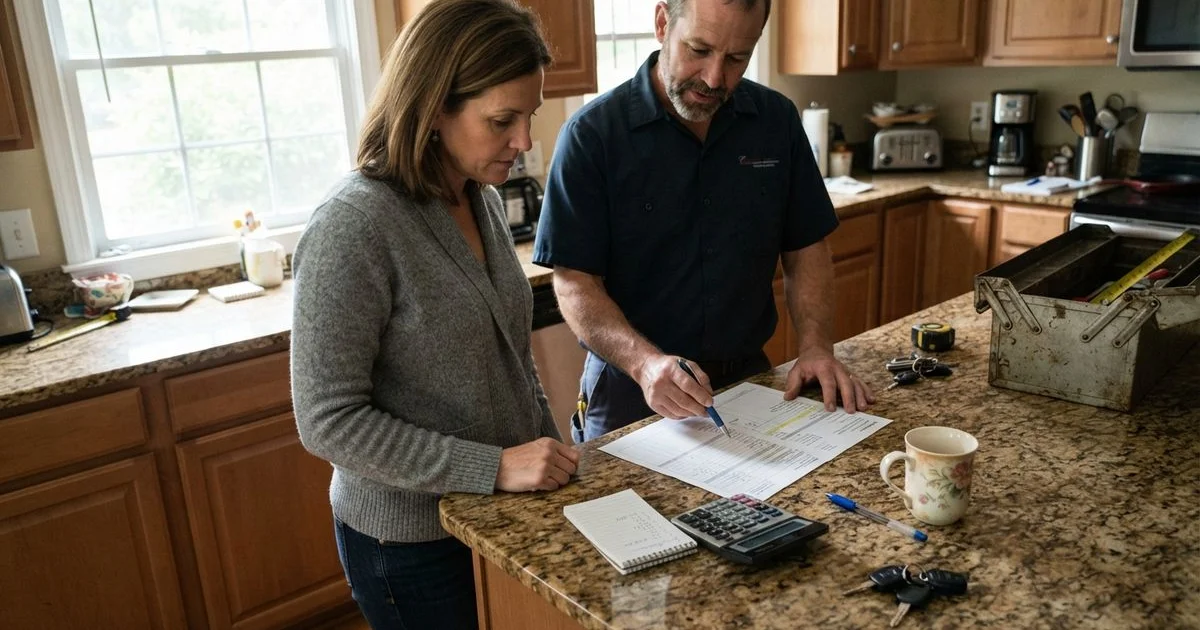
Asking “what does a handyman cost” in Georgia gets a wide range of answers, because the job itself does most of the pricing. A ten-minute fix and a full day of carpentry both fall under “handyman work,” and the price reflects that spread more than any fixed rate card does.
Here’s how to read a quote before you agree to it, and what typically moves the number up or down.
What actually drives the price
Four factors explain most of the variation between a cheap visit and an expensive one:
- Time on site. Labor is the biggest line item for most jobs. A stuck door hinge takes minutes; replacing a section of rotted deck board takes hours.
- Materials. Paint, hardware, lumber, and fixtures add up fast, especially if you want a higher-grade finish.
- Access and condition. An outlet behind a bookshelf, a fixture in a two-story stairwell, or wiring in an older Duluth or Johns Creek home built before modern code all add time.
- Urgency. Same-day or after-hours requests usually carry a premium over work booked a few days out.
| Job type | Typical time on site | What usually changes the price |
|---|---|---|
| Small repair (fixture, door, patch) | 1-2 hours | Access, whether parts need to be sourced |
| Carpentry or drywall work | 2-6 hours | Size of the area, matching existing texture or trim |
| Electrical fix | 1-3 hours | Age of wiring, whether it’s a swap or a new circuit |
| Plumbing fix | 1-3 hours | Whether a part is behind a wall or under a slab |
| Painting a room or surface | 3-8 hours | Prep work, number of coats, ceiling height |
| Furniture or TV mounting | 1-2 hours | Wall type, number of items, cable concealment |
Treat this as a starting frame, not a promise. Every home and job varies, and a photo or in-person look at the actual work is the only way to get a number you can rely on.
Hourly, flat-rate, and trip fees
Most Georgia handymen use one of three pricing structures, and it’s worth knowing which one you’re getting quoted before you compare two businesses side by side.
An hourly rate with a trip or service-call fee is common for open-ended punch lists: you’re paying for time, plus a flat amount just for the visit. A flat per-job rate suits well-defined, repeatable tasks like assembling a dresser or mounting a single TV, where the handyman already knows roughly how long it takes. Emergency or after-hours work usually adds a multiplier on top of either model, sometimes 1.4 to 1.8 times the standard rate, because you’re asking someone to rearrange their evening or weekend.
None of these is inherently cheaper. A flat rate protects you if the job runs long; an hourly rate protects you if it finishes fast. What matters more is getting the structure in writing before work starts.
When a small job turns into a bigger bill
The most common source of a higher-than-expected final cost isn’t a dishonest quote, it’s a hidden problem. Water stains behind a wall, wiring that doesn’t match what a fixture needs, or a subfloor that’s soft under old tile are all things a handyman can’t always see until the job is already open. A tradesperson who’s upfront about this possibility, and who pauses to tell you before proceeding, is a better sign than one who quotes suspiciously low and never mentions it could change.
Bundling tasks into one visit is the most reliable way to bring your average cost per job down, since you’re only paying one trip fee and the handyman isn’t packing up and driving across town between small fixes. If the hidden problem turns out to be storm or water damage rather than routine wear, it’s worth asking whether homeowners insurance picks up part of the bill; our guide on whether handyman work is covered by insurance walks through when that applies.
Getting a number you can trust
A rough estimate from a page like this is a starting point, not a substitute for a real quote. The most accurate numbers come from describing the job clearly, sharing a photo when you can, and asking the handyman directly how they price: hourly, flat, or a trip fee plus time. Our directory of vetted Georgia handymen lists businesses across the state so you can compare a few quotes rather than book the first name you find, and our ranking methodology explains exactly what we weigh when we score a listing, so you know a high rank reflects real review history rather than a paid placement.
FAQ
- Do handymen in Georgia charge by the hour or a flat rate?
- Both models show up in Georgia. Many charge a flat trip or service-call fee that covers the first hour, then bill hourly after that. Others quote a flat price per job once they know the scope, which is common for repeat tasks like a fixture swap or a piece of furniture assembly.
- Is there a minimum charge for a small job?
- Most handymen set a minimum, often equal to one to two hours of labor plus any trip fee, because driving out for a five-minute fix still costs them the visit. Bundling several small jobs into one appointment is usually the cheaper way to handle a short list.
- Why did my quote go up once the handyman started working?
- Opening a wall, a cabinet, or an old fixture sometimes reveals a second problem, like rotted wood behind trim or wiring that doesn't meet current code. A reputable pro stops and tells you before doing the extra work, rather than padding the bill afterward.
- Do materials cost extra, or are they included in the quote?
- Ask this upfront. Some handymen mark up materials they supply and pass along the receipt; others ask you to buy the paint, hardware, or fixture yourself. Either way, get it in writing before the job starts.