Water-damaged drywall: what to fix right away vs what can wait
By Shawn Dobanton · Updated 2026-08-13
This is general information, not medical advice. If you have ongoing respiratory symptoms you suspect are related to mold, talk to a doctor, and if mold coverage is extensive, consider a professional mold assessment before starting repairs.
A water stain on drywall is one of those problems that looks purely cosmetic until it isn’t. What decides whether it’s an urgent fix or something that can wait for a scheduled repair mostly comes down to timing and moisture, not how bad the stain looks.
The clock that actually matters
Mold can start developing on wet drywall within roughly a day or two once it’s been sitting damp, which is faster than most people expect. That’s why the first move after any leak, big or small, is stopping the water source and drying the area out, not scheduling a cosmetic repair. A fan and good airflow for a day or two before anything else happens is often the single most useful step.
Urgent versus can-wait
| Fix this urgently | Can typically be scheduled normally |
|---|---|
| Active leak still wetting the drywall | A dry stain from a leak that’s already fixed |
| Visible mold or a musty smell | Minor discoloration with no odor or softness |
| Soft, sagging, or crumbling drywall | Small, contained water spots from an old, resolved issue |
| Water damage near electrical outlets or fixtures | Cosmetic patching once everything is confirmed dry |
What a proper repair actually involves
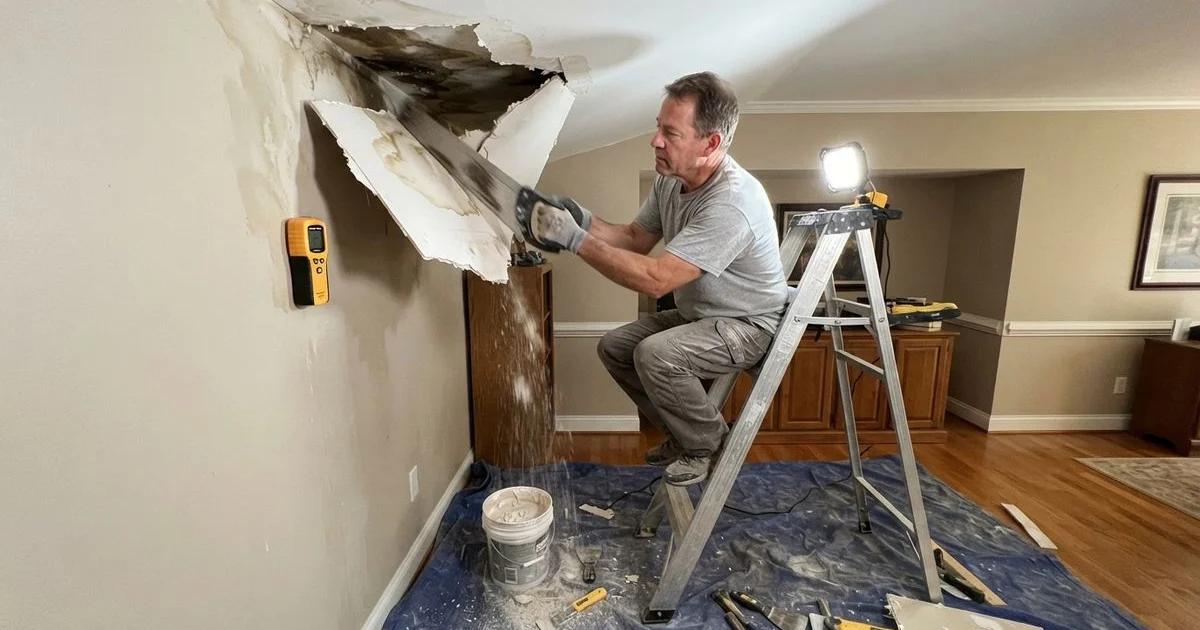
Once the source is fixed and the area is dry, a legitimate repair generally means cutting out the damaged section rather than patching over it, checking behind the visible stain for damage that spread further than it looks, and confirming there’s no lingering moisture before closing the wall back up. Painting over a stain without doing this first just covers the evidence of a problem that’s likely to resurface, sometimes worse.
If the affected area is small and the leak is clearly resolved, this is well within general handyman scope. If there’s visible mold covering a large area, or you’re not sure the source has actually stopped, that’s worth a professional mold assessment before repair work starts.
How to tell how far the damage actually spread
Water rarely stays contained to the visible stain. Press gently on the drywall around the discolored area; softness or give beyond the stain’s edges usually means moisture traveled further than it looks. A musty smell that’s stronger than the visible damage suggests is another sign there’s more going on behind the surface, sometimes inside a wall cavity or above a ceiling, that a simple visual check won’t catch. When in doubt, it’s worth having someone open a small inspection area rather than assuming the stain marks the full extent of the problem.
Where this often comes from in Georgia homes
Roof leaks after storms, plumbing leaks behind walls, and condensation from humidity in poorly ventilated spaces are common sources of water-damaged drywall across the state. Georgia’s carpentry and drywall hub lists local specialists who handle this kind of repair regularly, often alongside the painting work needed to finish the patch. If the home is old enough that lead paint could be part of that patch-and-paint step, our guide on lead paint and older homes in Georgia covers what to check first.
Insulation behind the wall is easy to forget
If the water damage reached insulation inside the wall cavity, that material often needs replacing too, since wet insulation loses effectiveness and can hold moisture against the back of new drywall long after the visible surface looks dry. A handyman repairing the drywall should check what’s behind it before closing the wall back up, not just patch over what’s visible from the room side.
Getting it handled right
Fix the water source first, dry the area, then assess how much drywall actually needs replacing rather than assuming a quick paint job will do. Our directory covers Georgia handymen who take on this kind of repair, and our ranking methodology explains how we score review consistency and reliability.
FAQ
- How fast can mold start growing on wet drywall?
- Mold can begin developing within roughly 24 to 48 hours on drywall that stays wet, which is why drying the area out matters more than the cosmetic repair in the first day or two.
- Can I just paint over a water stain instead of replacing the drywall?
- Only if the drywall underneath is fully dry and structurally sound, and the original leak has been fixed. Painting over a stain without confirming both of those first just hides a problem that's likely to come back.
- Do I need to replace the whole wall, or just the damaged section?
- Usually just the damaged section, cut out and patched, unless the water damage spread further than it looks on the surface. A handyman experienced with water damage repair will check behind the visible stain before deciding how much to remove.
- Is a small water stain from an old, already-fixed leak still a problem?
- If the leak is confirmed fixed and the area has been dry for a while, an old stain is mostly cosmetic. It's still worth a quick check for softness or mold odor before just painting over it.